
Advanced Laparoscopic Tubal Recanalization
Introduction
Advances in minimally invasive surgery have significantly improved fertility restoration options for women who have previously undergone tubal sterilization. One such breakthrough procedure is Advanced Laparoscopic Tubal Recanalization (LTR)—a highly precise surgical technique designed to restore the continuity of the fallopian tubes and enable natural conception.
This blog explores the procedure, indications, benefits, risks, and outcomes associated with advanced laparoscopic tubal recanalization.
Understanding Tubal Recanalization
Tubal recanalization refers to the surgical restoration of blocked or previously ligated fallopian tubes. This is commonly sought by women who have undergone tubal ligation (permanent sterilization) but later wish to conceive again.
Traditional open surgical methods have largely been replaced by laparoscopic approaches, which offer greater precision, reduced recovery time, and improved success rates.
What is Advanced Laparoscopic Tubal Recanalization?
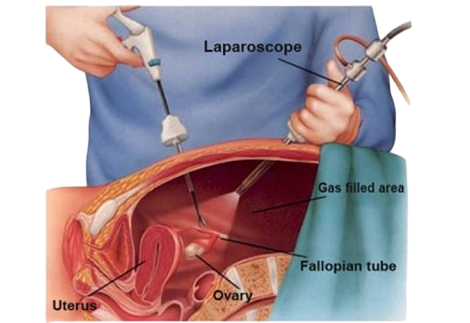
Advanced laparoscopic tubal recanalization is a minimally invasive microsurgical procedure performed using a laparoscope (a thin, lighted camera) and specialized instruments.
The procedure involves:
- Removal of the blocked or damaged segment of the fallopian tube
- Rejoining (anastomosis) of the healthy ends
- Ensuring proper alignment to allow egg and sperm passage
High-definition imaging and microsurgical techniques enhance accuracy, minimizing tissue damage and improving outcomes.
Indications for the Procedure
This procedure may be recommended for women who:
- Have previously undergone tubal ligation and desire pregnancy
- Have proximal or distal tubal blockages
- Have good ovarian reserve and overall reproductive health
- Prefer natural conception over assisted reproductive techniques like IVF
Preoperative Evaluation
A thorough assessment is essential before proceeding. This typically includes:
- Detailed medical and surgical history
- Hormonal profile to assess ovarian function
- Imaging studies such as hysterosalpingography (HSG)
- Semen analysis of the partner
Patient selection plays a crucial role in determining the success of the procedure.
Surgical Technique Overview
The advanced laparoscopic approach involves:
- Anesthesia and Access
The procedure is performed under general anesthesia with small abdominal incisions. - Visualization
A laparoscope provides a magnified view of the pelvic organs. - Tubal Assessment
The surgeon evaluates the site and extent of blockage. - Excision and Reanastomosis
The blocked segment is removed, and the healthy ends are meticulously sutured using microsurgical techniques. - Patency Testing
Dye is introduced to confirm that the tubes are open.
Advantages of the Laparoscopic Approach
- Minimally invasive with small incisions
- Reduced postoperative pain
- Shorter hospital stay and faster recovery
- Lower risk of adhesions
- Enhanced precision with magnification
Success Rates and Outcomes
Success depends on several factors, including:
- Age of the patient
- Length and health of the remaining fallopian tube
- Type of prior tubal ligation
- Surgical expertise
Pregnancy rates after laparoscopic recanalization typically range from 40% to 80%, with higher success observed in younger women and those with favorable tubal conditions.
Risks and Complications
While generally safe, the procedure carries some risks:
- Infection
- Bleeding
- Adhesion formation
- Ectopic pregnancy (a known risk after tubal surgery)
- Failure to restore tubal patency
Careful surgical technique and follow-up help minimize these risks.
Laparoscopic Recanalization vs IVF
Patients often consider whether to undergo tubal recanalization or opt for in vitro fertilization (IVF). Key differences include:
| Factor | Laparoscopic Recanalization | IVF |
|---|---|---|
| Conception | Natural | Assisted |
| Cost | One-time surgical cost | Multiple cycles may be needed |
| Success per cycle | Moderate to high | Variable |
| Time to pregnancy | May take months | Faster per attempt |
For many women, recanalization offers the advantage of multiple opportunities for natural conception after a single procedure.
Postoperative Care and Recovery
- Most patients are discharged within 24–48 hours
- Return to normal activities within 1–2 weeks
- Follow-up visits to monitor recovery
- Attempting conception is usually advised after a short healing period
Conclusion
Advanced laparoscopic tubal recanalization represents a significant advancement in fertility-restoring surgery. By combining minimally invasive techniques with microsurgical precision, it offers women a safe and effective pathway to natural conception after tubal sterilization.
Careful patient selection, skilled surgical execution, and proper postoperative care are key to achieving optimal outcomes. Women considering this procedure should consult a qualified fertility specialist to determine the most suitable approach based on their individual circumstances.